Bitty & Beau's Mobile Franchise Push Turns Mission Into Market Access
Bitty & Beau's Coffee is expanding its Cruiser model, with eight mobile units operating and eight more in production as the mission-led coffee brand seeks new franchise owners.
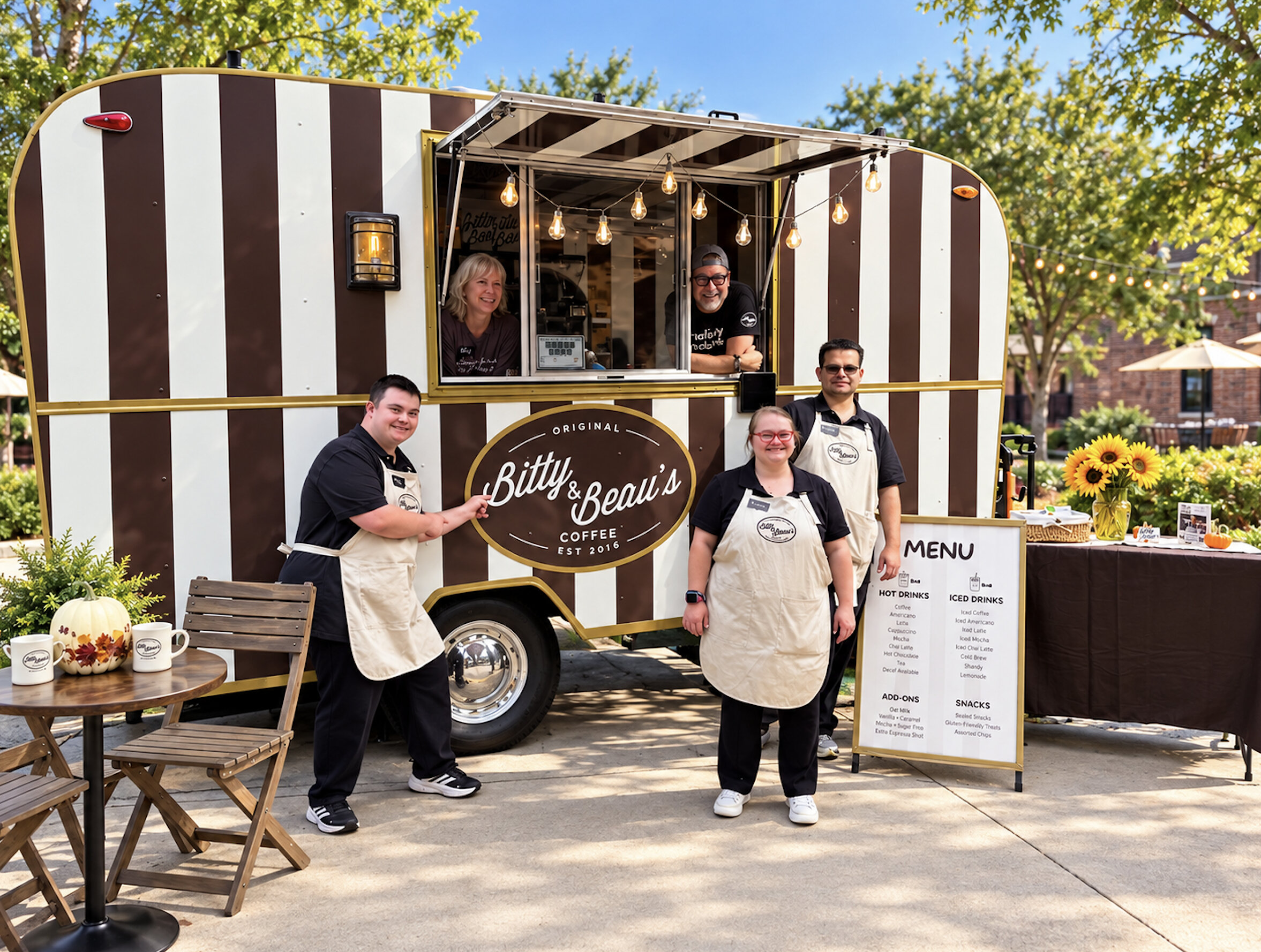
A Bitty & Beau's Coffee Cruiser mobile coffee vehicle.
Bitty & Beau's Coffee is leaning into mobile franchising as a way to expand its inclusion-led coffee model without asking every new owner to open a permanent cafe.
The Wilmington, North Carolina company said it now has eight Bitty & Beau's Coffee Cruisers operating, another eight in production and dozens of additional opportunities in development. The Cruiser is a fully equipped mobile coffee shop designed for events, schools, workplaces, private gatherings and other community destinations.
That format gives the brand a different growth path from the traditional coffee-shop rollout. A mobile unit can enter smaller or more flexible markets, build local partnerships and test community demand without the same lease, buildout and fixed-overhead profile as a brick-and-mortar store.
For prospective franchisees, the appeal is not only operational. Bitty & Beau's was founded in 2016 by Amy and Ben Wright and has built its identity around employing people with intellectual and developmental disabilities. The company says it now employs more than 500 people with disabilities across its wider business.
That mission is central to the Cruiser model. The company is not simply selling coffee from a vehicle; it is offering local owners a way to combine business ownership, community visibility and inclusive employment. That combination can be powerful, but it also raises the standard for franchise support. Owners need training, branded products, operational systems and guidance on how to build meaningful local relationships.
The mobile approach also fits a broader franchise-market pattern. Many concepts are testing smaller, more flexible formats as real estate costs, labor pressures and consumer habits make full-size stores harder to underwrite. Food trucks, kiosks, carts and mobile service units can create access points where a traditional unit would be too expensive or too slow to launch.
Bitty & Beau's has an added advantage because its brand story already travels well. The mission gives local operators a clear reason to approach schools, businesses, community events and private hosts. The challenge will be turning goodwill into repeatable operations, reliable schedules and enough volume to support a franchise owner over time.
The company is seeking candidates in eligible markets across the United States. It says total investment, fees and other terms are detailed in its Franchise Disclosure Document, with opportunities subject to territory availability and franchise regulations.
For franchise watchers, the Cruiser push is worth following because it tests whether a deeply mission-led brand can scale through a lower-footprint model while preserving what made it distinctive. Expansion will only work if each unit feels local, inclusive and professionally operated rather than simply portable.
If the next wave of Cruisers performs, Bitty & Beau's could give other purpose-led brands a useful template: grow in a way that lowers the barrier to entry, but keep the mission close enough to the operating model that it remains visible in every customer interaction.