Teriyaki Madness Reopens Madison Under Corporate Ownership And Turns A Store Into A Test Kitchen
Teriyaki Madness is reopening its Madison, Wisconsin restaurant on June 12 under corporate ownership, with lower pricing and a role as a future menu-innovation test kitchen.
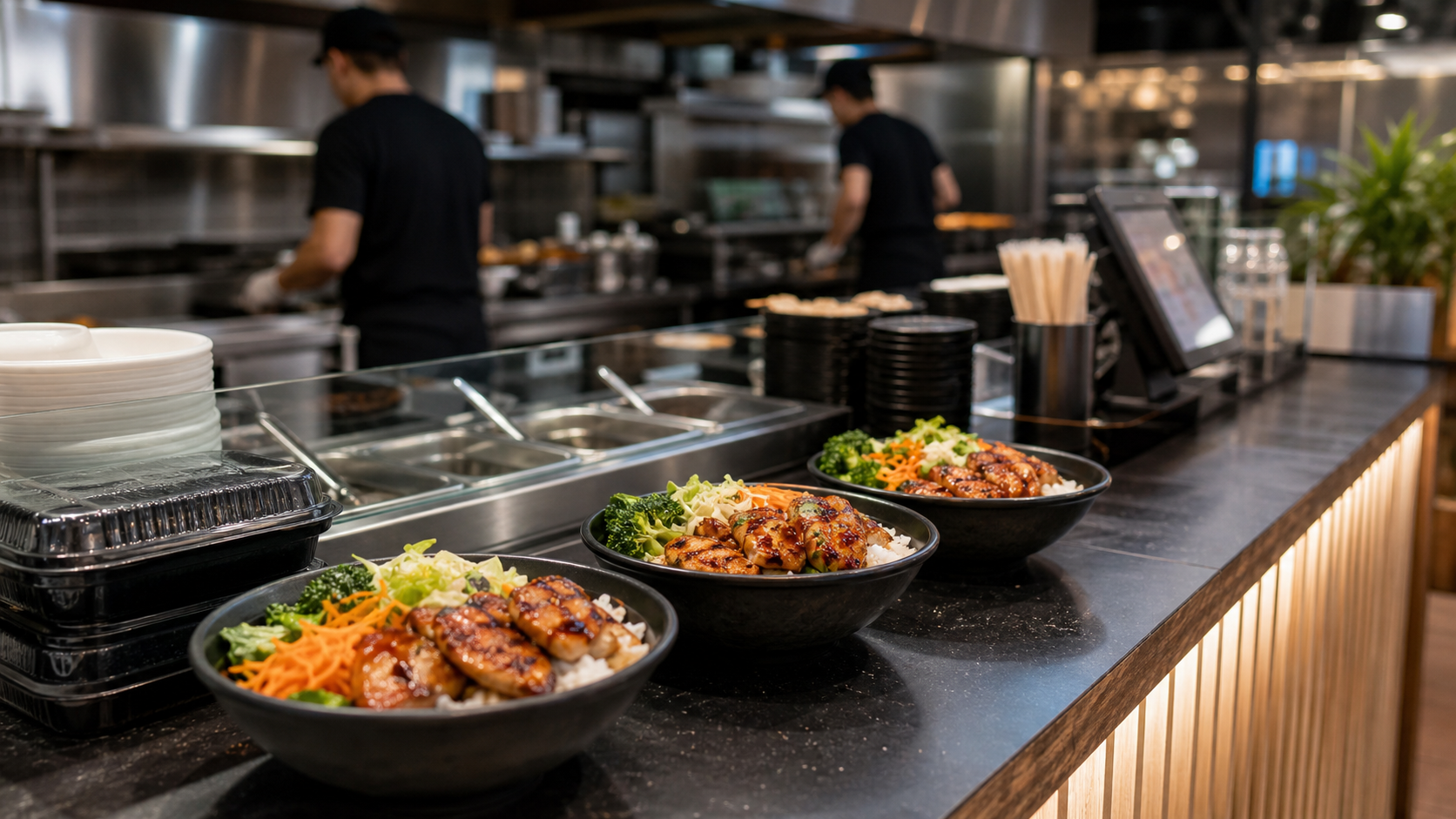
Teriyaki bowl restaurant counter with prep line and menu board
Teriyaki Madness is reopening its Madison, Wisconsin location on June 12 at 7464 Mineral Point Road after the previous franchisee's retirement, QSR Magazine reported on June 4. The restaurant is returning under corporate ownership with refreshed operations, lower menu pricing, and a role as a future menu-innovation test kitchen. That combination makes the reopening more strategically interesting than a typical local restaurant comeback.
Corporate takeovers can be sensitive in franchise systems. They may happen for many reasons: transition, market preservation, underperformance, strategic testing, or a decision to keep a site alive when a franchisee exits. In Madison, the public explanation centers on the previous franchisee's retirement and a corporate-led reset. The brand is using the reopening to reintroduce itself to local customers while also creating a controlled environment for operational and menu learning.
The test-kitchen element is especially useful. Franchise brands need places to try new products, pricing, service flows, packaging, and promotions before pushing changes across the system. A corporate-owned restaurant can give the franchisor cleaner visibility into labor, food cost, guest feedback, ticket times, and training needs. It also lets the brand experiment without asking a franchisee to absorb all the risk of an unproven idea.
The reopening offer is aggressive. QSR Magazine reported that the first five guests will receive free Teriyaki Madness for a year, the next 20 will receive free food for a month, and customers can buy $6 Chicken Teriyaki Bowls in junior and regular sizes on June 12 and 13. That kind of launch pricing can rebuild local awareness quickly, but it needs to be managed so the store does not create opening-week chaos that damages the first impression.
Lower menu pricing is another important signal. Fast-casual brands are balancing inflation, customer value perception, delivery fees, and competition from both quick service and casual dining. A corporate store can help the brand test whether a sharper value message drives frequency without compromising economics. If the lower pricing and refreshed operations work in Madison, the lessons may influence broader system support.
For customers, the reopening has to feel like a clean return rather than a complicated ownership change. That means the brand will need clear local messaging, fast service, and a reason for former guests to try again. For the system, the store can become a practical source of data on what Madison customers buy, how they respond to bowl pricing, and which menu tests deserve broader franchisee attention.
That feedback loop is valuable only if the company converts it into practical field support. A test kitchen should help franchisees understand what works, what fails, and what operational changes are required before a systemwide rollout.
For franchisees, the key question is whether corporate stores become useful learning labs. When franchisors operate restaurants, they can better understand real-world staffing, training, and cost pressures. That knowledge can improve the playbook if it is shared transparently. Teriyaki Madness' Madison reopening will be worth watching because it turns a single-unit transition into a chance to test pricing, operations, and innovation in front of real customers.
"A corporate-owned restaurant can become a controlled environment for menu, pricing and operational learning across the whole system."